
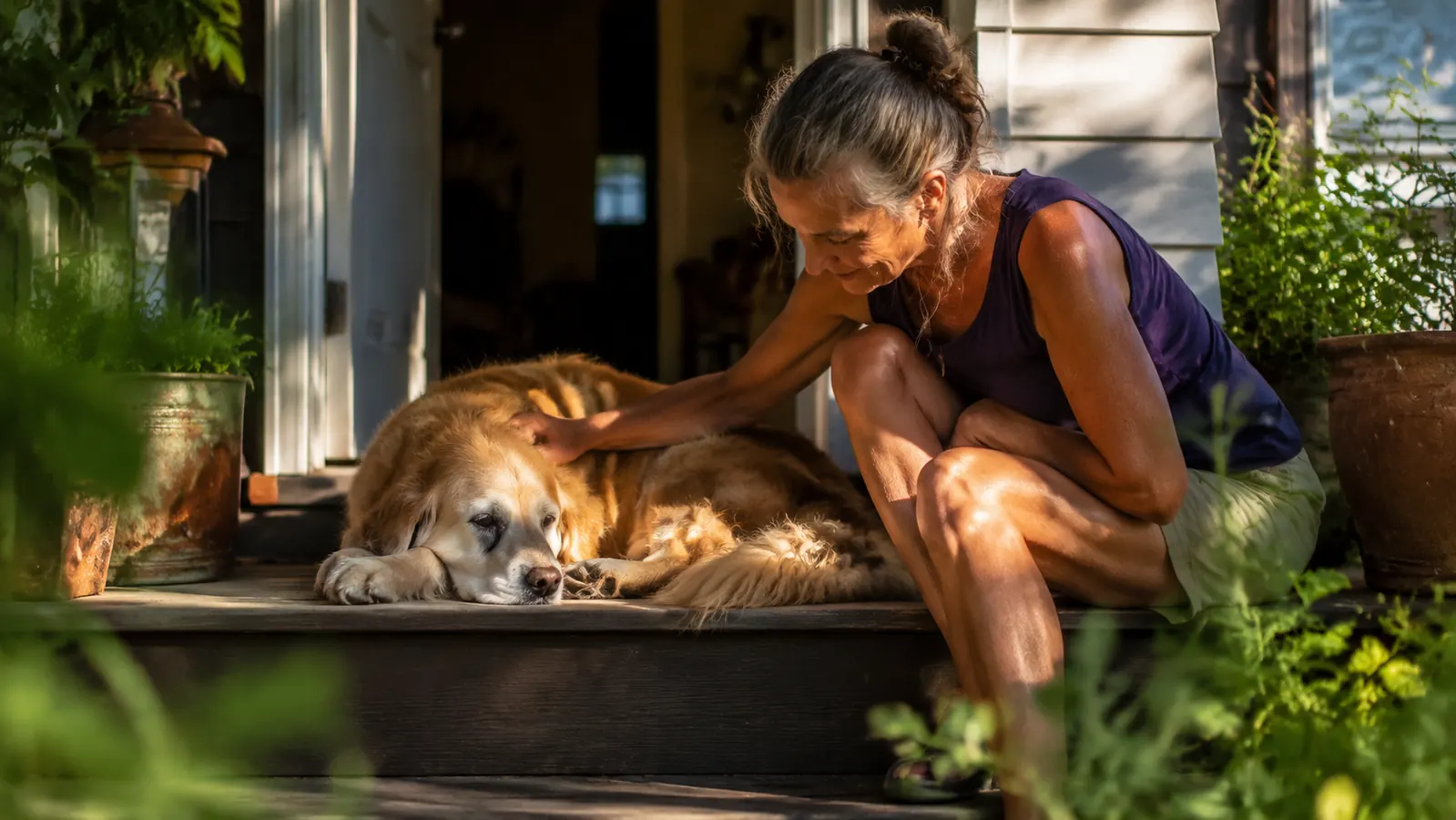
My golden retriever Sadie turned 13 this past April, and the change was gradual enough to sneak up on me. She still wagged her tail the same way when I opened the treat jar, but on our morning walk she started slipping to the back, two steps behind my other dog, and by the time we turned for home she was holding up her right hind leg. I told myself it was the cool weather. Then I noticed her pause at the bottom of the stairs before committing to the climb.
Before I tell you what helped, I want to be honest about one thing. Joint stiffness in an old dog is not fixed by any single product, and anyone who sells you a magic pill for it is handing you a story. What actually changed for Sadie was a daily routine made of four small habits, plus one supplement, Nutramax Cosequin, that I kept coming back to after trying cheaper chews first. This is that routine, the order I do it in, the honest version of what took time, and where it still has limits.
I am going to lay the whole thing out so you can steal it and reshape it for your own dog. Four habits and one daily tablet, in an order that lets each piece build on the last. There is nothing exotic here, and that is the point; the exotic fixes are the ones that empty your wallet and leave a scared dog in the exam room. Every step below is something I can vouch for because I watched it work, and I was the one feeding her the treats either way.
Start the day with the joint support that earned its spot in the bowl
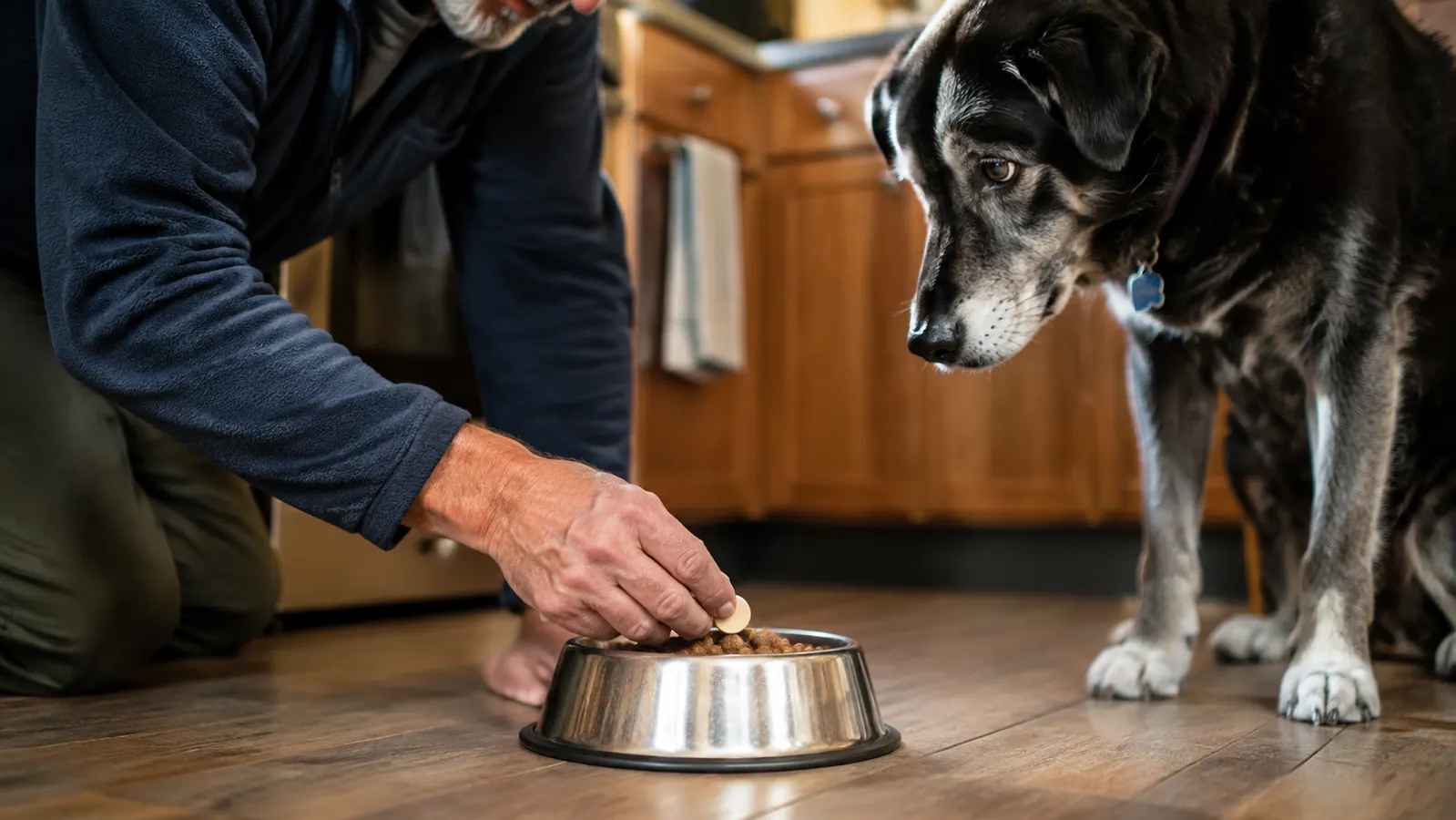
Sadie gets one Nutramax Cosequin chewable tablet every morning. I tried the bargain-bin alternative first and switched back after three weeks. Today's price and the current bottle size are on Amazon.
Amazon Check Today's Price on Amazon →Step 1: Warm up before you ever step out the door
Cold joints are stiff joints, and stiff joints hurt more the moment a dog puts weight on them. The single cheapest fix I found was a warm-up before the real walk. Instead of clipping the lead and heading straight out, I take Sadie on a slow, loose-leash lap around the backyard for five or six minutes first. She sniffs, she wanders, she stretches without thinking about it, and by the time we reach the front gate the easy stiffness has largely worked itself out.
Do not rush this part, and do not make it a workout. Let your dog set the pace and keep it slow. A short, gentle warm-up a couple of times a day beats one long walk that ends with a lagging, sore dog. Watch for the half-hearted sniff that means she is done, and turn for home with no guilt. Every step counts when your dog is old, and none of it does if it leaves her hurting.
The same idea applies to cold mornings. I schedule Sadie's longest walk for mid-morning in winter, once the sun has had a chance to warm the ground, not at the crack of dawn. Ten minutes of schedule-timing saved me a lot of limping.
There is a reason the warm-up works beyond comfort. Movement warms the fluid that lubricates the joint, and warm fluid lets the joint glide instead of grind. That does not sound exciting, but it is the difference between a dog who walks out stiff and one who is loose by the end of the block. The worst thing I ever did was treat the warm-up as wasted time and skip it.
Step 2: Soften every landing spot in the house
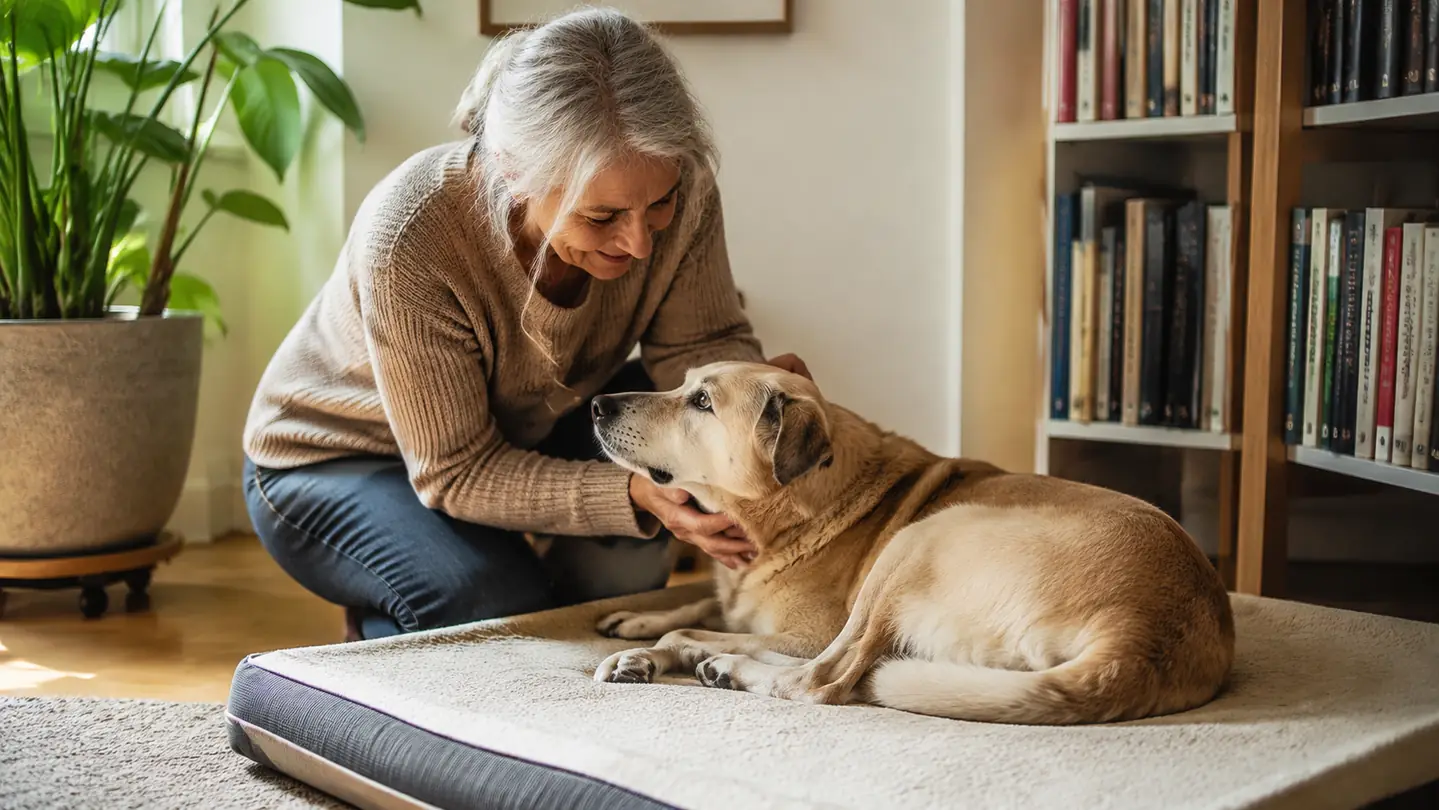
Hard floors ask an old dog to hold herself up on painful joints just to stay still. Sliding underlay mats, keeping her on the carpet, and giving her a real foam mat in her usual corner made a bigger difference than I expected. Memory foam that supports the withers and the pelvis, not just a thin cushion that flattens flat, gives her hips something to press into instead of the bare floor.
Put the mat where she already lies, not where you want her to lie. For Sadie that is the sunny corner near the patio door, and I keep it away from drafts. The raised edge lets her rest her head and chest instead of craning her neck, and the whole thing costs a fraction of a single vet visit. It took her about three days to decide it was hers.
Do the same for the places she jumps up, which is to say, stop letting her jump up. The couch became off limits unless I lifted her onto it, and I keep her on the floor mat instead. Every repeated leap is a little landing on already-tired joints, and removing a handful of those a day adds up fast.
Keep the mat and its cover clean while you are at it, because a dog who avoids a spot because it smells like detergent or feels damp will simply lie on the hard floor instead. I pull the washable cover off every couple of weeks and launder it, which takes about ten quiet minutes with a cup of coffee. A mat that smells neutral and stays dry is a mat that actually gets used, and that is the entire battle.
Step 3: Make stairs and the car ride kinder
A flight of stairs is a wall to a stiff old dog, and the car step is a daily hill. I stopped carrying Sadie up and down at full weight, because lifting a 70-pound dog wrong strains my back and her hips at the same time. A good ramp or a set of pet steps, kept in place with treats and praise, gave her a way in and out of the truck that she could manage on her own.
Keep the ramp and the stair helpers set up all the time, not just when you remember. A ramp that has to be dragged out and put away is a ramp that never gets used. Sadie ignored the folded-up ramp for weeks, then walked straight up it one morning when it was already waiting by the tailgate. Repetition and low effort are the whole game with a senior dog.
If your dog still needs a boost, never grip the hind legs and hoist. Put one arm under the chest and the other under the rear, lift the whole trunk evenly, and spare the joints the twisting. My back lasted a lot longer once I stopped heaving her rear end over the rim.
And do not stop at the car. The same logic that puts a ramp at the tailgate belongs at the foot of the bed. A low set of steps meant Sadie could join us for a few calm minutes in the evening and come down on her own overnight, which saved my back and turned a nightly heartbreak into a small victory. She feels like a dog again when she can reach me, and that alone was worth the cost of the steps.
Step 4: Keep the nails from working against her
This one surprised me, so listen. Overgrown nails do not just click on the floor, they push the toes upward and change the whole shape of a dog's stride. A slightly wrong gait makes weak joints take the extra load, and that tires an old dog faster than anything else in the routine. I never connected long nails to stiff hips until our vet pointed out the dead giveaway on the floor.
Once a week I take a quiet nail grinder to Sadie's front feet. I switched to a grinder over clippers for the simple reason that her nails are dark and I cannot see the quick, and a grinder takes off a little at a time without the snap and the risk of a bleed. Short nails meant she planted her feet flat again, and within a couple of weeks her whole walk opened up.
Keep the nail session short, calm, and worth her while or the whole routine falls apart. I smear a little peanut butter on her usual mat, run the grinder on low near her foot first so she can hear the buzz, and only then touch her toes. Five minutes once a week keeps her walking tall, and it has become the most reliable part of the evening for both of us. Trust me, a calm dog who will let you touch her feet is worth the trouble of the routine.
Step 5: Give the joints a daily backup in the bowl
Now the part I get asked about most, the supplement. Sadie gets one Nutramax Cosequin chewable tablet with her breakfast every single day. The active ingredients are glucosamine and chondroitin, which are building blocks for joint cartilage rather than pain medicine. That is the point: it does not numb a sore hip, it tries to give the joint something to rebuild with, which is why it needs to be daily and why it takes time to matter.
I measured the honest timeline: six weeks, not six days. There was no overnight change, and I would not trust any product that promised one. What I noticed first was that the morning stiffness got shorter before the limping went away entirely. By the second month Sadie stopped holding up her right hind leg on our walk, and the climb up the porch steps lost most of its hesitation. Nutramax is a name I trust partly because of the huge number of other owners leaving reviews, and partly because the chew did not sour her appetite like the cheaper tablets had.
Give it daily, not as needed. A joint supplement that sits half-used in the cupboard for the bad days loses the whole point, because the cartilage benefit builds on an everyday schedule. I buy the larger bottle and set a reminder, and it is the most reliable part of the whole routine. If you are still wondering whether your dog has crossed the line into needing help, I wrote a separate piece on the specific signs I finally noticed in Sadie, and it may save you a few weeks of guessing. I also went deeper into what six full months of Cosequin did and did not do for her in the long-term review.
The tablet is dosed by your dog's weight, so read the label and pick the right size rather than guessing. Do not double up on a bad day thinking it will help faster; the steady daily habit is what matters, and more of a supplement is not the same as a fix. And if your dog is still stiff after a month or two on any brand, that is your cue to talk to the vet, because the routine works best as a team sport, not a substitute.
What Else Helps
Everything above works on a daily schedule, and a few extras multiply it. Keeping a senior dog lean is the single most powerful lever I know, because every extra pound is extra load on the joints, so I weigh Sadie's food instead of eyeballing it. A few minutes of gentle heat, a warm towel from the dryer held against a stiff hip, loosens her up before bed, and quiet massage along the spine and thighs wind her down. If you have a pool or a calm lake nearby, a short, supervised swim is about the easiest full-body exercise a stiff dog can get without pounding the joints.
One honest warning to close the routine. This is comfort and support for a slow, gradual stiffness, not a substitute for a diagnosis. If the limp comes on suddenly or your dog refuses to put any weight on a leg at all, call your vet first and skip the routine until you have an answer. A stiff old dog who is still bright-eyed and eating well is a good candidate for all of this. A dog in sudden pain needs the vet, not a new supplement.
If you can, set up a yearly senior panel with your vet just to keep a baseline on the kidneys and liver, which is especially important if your dog is on any daily pill. That conversation gave me real peace of mind that the supplement I had settled on was a reasonable daily choice and not a shot in the dark. When the routine is in place and the vet has signed off, you can stop second-guessing every step and just enjoy the dog, which is the whole point of all of this.
Six weeks in, Sadie stopped holding up her right hind leg on our morning walk. The change was slow and daily, not sudden, and that is exactly why it did not feel like luck.
The one daily habit that made the rest of the routine hold together
Sadie has been on Nutramax Cosequin for months now, and it is the single part of this routine I would not skip. Check the current price and bottle size on Amazon before you start.
Amazon Check Today's Price on Amazon →